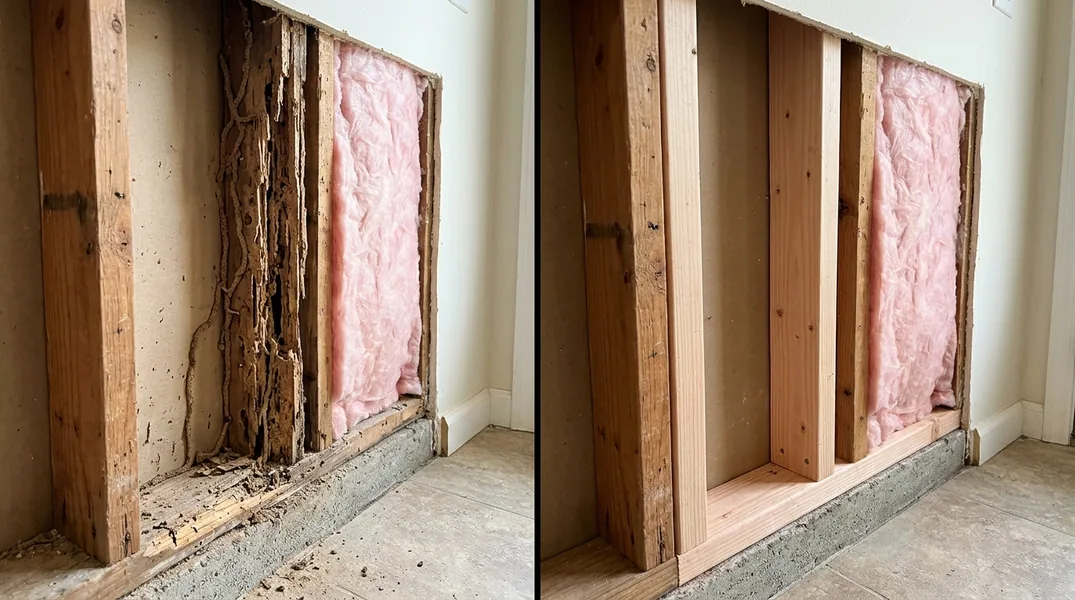
Stockton's Climate and Geography Create the Perfect Storm for Wood Damage
Stockton sits in California's Central Valley, where environmental conditions are uniquely suited to wood-destroying pests and moisture problems. The region experiences hot, dry summers followed by wet winters, creating extreme seasonal swings that stress wooden structures. This climate pattern accelerates wood degradation and attracts termites, which thrive in the warm months and remain active year-round in our temperate winters.
Beyond climate, Stockton's proximity to the Delta waterways means higher humidity levels and occasional flooding risks. Many homes built decades ago were constructed without modern moisture barriers or treated lumber, making them especially vulnerable to both termite infestations and fungal decay. The combination of heat, humidity, and older building practices creates a perfect breeding ground for the wood rot and termite damage we see regularly throughout the area.
Understanding Termite Damage and Why It Spreads So Quickly
Termites are silent destroyers. Unlike other pests that are immediately visible, termites work inside wood structures where homeowners can't see them until significant damage has already occurred. A single termite colony can contain hundreds of thousands of individuals, and they consume wood 24 hours a day, seven days a week. In Stockton's warm climate, termite colonies establish themselves quickly and spread through structural wood at alarming rates.
The reason Termite Damage Repair becomes so expensive is that homeowners often discover the problem too late. By the time visible signs appear, termites may have compromised floor joists, support beams, wall framing, and foundation structures. Early detection through professional inspections is your best defense, but once damage is extensive, structural repairs become necessary to restore your home's safety and integrity.
Dry Rot and Wood Rot: The Hidden Threat in Stockton Homes
Dry rot and wood rot are fungal diseases that thrive wherever wood stays damp or poorly ventilated. Despite its name, dry rot actually requires moisture to develop. The fungi feed on the cellulose in wood, breaking down its structural integrity until the wood becomes soft, crumbly, and unable to bear weight. In Stockton homes, these conditions develop in crawl spaces, attics, bathrooms, kitchens, and around windows and doors where water intrusion is common.
What makes Wood Rot & Dry Rot Repair urgent is that the damage spreads silently through hidden structural members. A homeowner might notice soft spots in flooring or discolored walls, but the rot has likely already extended deep into the framing. Unlike termite damage, which creates visible galleries and mud tubes, wood rot can consume large sections of structural wood before becoming obvious. This is why professional inspection and early intervention are critical to preventing catastrophic structural failure.
Why Older Stockton Homes Are at Higher Risk
Many properties in Stockton were built in the mid-20th century or earlier, when building codes were less stringent and moisture management was poorly understood. These homes typically lack proper vapor barriers, have inadequate ventilation, and use untreated lumber throughout their structures. Older crawl spaces often have exposed soil with minimal or no moisture barriers, creating an ideal environment for both termites and fungal growth. Foundation vents may be blocked or deteriorated, trapping moisture against wood members.
Additionally, older plumbing and roofing systems are more prone to leaks, and decades of weather exposure have worn away protective coatings and sealants. A roof leak that goes unnoticed for even a few months can allow water to penetrate attic framing and insulation, creating conditions perfect for dry rot to establish itself. The longer these homes go without professional inspection and preventive maintenance, the greater the risk of serious structural damage requiring expensive Floor Joist & Subfloor Repair or Beam Replacement & Load-Bearing Wall Removal.
Wood Rot and Termite Damage Repair Cost in Stockton: What to Budget
The cost of repairing wood rot and termite damage in Stockton varies dramatically depending on the extent of damage, the location of affected wood, and the complexity of the repair. Small, localized repairs to trim or non-structural wood might cost a few hundred dollars, while damage to floor joists, beams, or foundation structures can easily exceed several thousand dollars. The most expensive scenarios involve structural members that require complete replacement and temporary support systems during construction, which can push costs into the tens of thousands.
The key to managing pricing is early detection and intervention. A homeowner who catches termite damage or wood rot in its early stages will pay significantly less than someone who waits until structural failure is imminent. Professional inspection typically costs between $300 and $600 but can save you tens of thousands by identifying problems before they become catastrophic. We recommend getting a free estimate from Stockton Carpentry to understand the true scope of any damage you suspect. Call us at (209) 299-0281 to schedule your inspection and receive a detailed assessment of repair needs and costs.
Prevention and Early Detection: Your Best Defense
The most cost-effective strategy for protecting your Stockton home is prevention and early detection. Schedule annual professional inspections to identify moisture problems, termite activity, and wood decay before they become serious. Keep gutters clean and functioning properly, maintain proper grading around your foundation to direct water away from the structure, and ensure crawl spaces have adequate ventilation and moisture barriers. Fix plumbing leaks immediately, repair roof damage promptly, and maintain caulking around windows and doors.
If you do discover signs of termite damage or wood rot, don't delay. The longer you wait, the more extensive and expensive the repairs become. Common warning signs include soft or spongy wood, visible mud tubes on foundation walls, discolored or bubbling paint, sagging floors, or a musty odor in crawl spaces and basements. If you notice any of these red flags, contact Stockton Carpentry today at (209) 299-0281 for a professional evaluation. Early action can mean the difference between a simple repair and a major structural overhaul, protecting both your home's integrity and your financial investment.
Looking for a professional carpentry contractor in Stockton? Stockton Carpentry responds fast for all your carpentry needs.
Get a Free QuoteOur services: Wood Rot & Dry Rot Repair · Termite Damage Repair · Floor Joist & Subfloor Repair