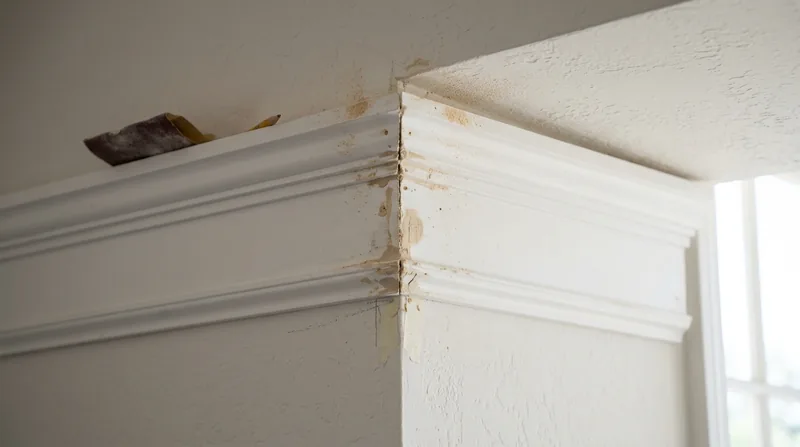




Crown molding and baseboard installation in Stockton transforms how a room feels, adding architectural detail that ties together walls, ceilings, and floors. In Stockton's mix of 1890s Victorians and Craftsman homes in the Magnolia Historic District, 1940s ranch properties across Lincoln Village, and newer subdivisions in Brookside and Weston Ranch, trim work either restores period character or establishes clean, modern lines. The Delta's hot dry summers and mild wet winters create seasonal wood movement, and when trim is installed without accounting for that shift, joints open and coping work fails. We install crown molding, baseboards, chair rail, and window trim with properly coped joints that stay tight, matched to the exact profiles your home's era demands, or kept contemporary and crisp in newer builds. Whether you're finishing a room renovation or upgrading tired trim throughout your house, the right installation makes the difference between work that lasts and trim that gaps and separates within a season.
Why Crown Molding and Baseboard Installation Matters in Stockton's Homes
Trim work is not just cosmetic. In Stockton, where seasonal moisture and Delta humidity cycle through wood framing and finished surfaces, baseboard and crown molding act as visual and functional boundaries between walls and floors, walls and ceilings. Properly installed trim conceals the gaps that develop as framing settles and shifts. Poor installation, or trim installed without accounting for wood movement, shows every seasonal change. Coped joints that are cut and fitted tight stay that way; butt joints and poorly scribed corners open wide by midsummer heat or winter dampness.
- Crown molding anchors the ceiling line and adds architectural proportion to rooms in Craftsman and Victorian homes.
- Baseboards protect walls from vacuum cleaners, furniture, and floor moisture, while concealing the gap between floor and wall framing.
- Chair rail and wainscoting add visual interest and break up tall walls in period homes across the historic districts.
- Coped joints and scribed cuts ensure trim stays tight as wood expands and contracts with Stockton's seasonal swings.
- Window and door casing frames openings cleanly and can be matched to existing trim profiles or replaced as part of a whole-home update.
Quality trim installation is the difference between a room that looks finished and one that looks incomplete.
Key info: In Stockton's older homes, original crown molding and baseboards are often solid Douglas fir or redwood, milled to profiles no longer made. We match those profiles by sourcing period-correct stock or by working with profiles you choose. In newer homes, we install modern MDF or paint-grade pine with clean, contemporary lines that complement your design.
For more on how trim and finish carpentry fit into your home's overall structure, see our finish and trim carpentry service page.
How We Install Crown Molding and Baseboards in Stockton
Installation starts with understanding your home's layout, existing trim profiles, and the wood movement patterns typical of Stockton's climate. We measure walls and ceilings, identify high spots and low spots in the framing, and plan cuts and joints to work with the home's actual geometry, not the blueprint. Crown molding requires precise angle cuts at corners and careful nailing to avoid splitting the stock. Baseboards must be scribed to uneven floors and walls so they sit tight. Every coped joint is cut by hand to fit the profile it meets, not just butted and caulked.
- We measure and plan the layout, accounting for doorways, windows, and any existing trim that needs to be matched or removed.
- We cut and fit crown molding at precise angles, using coped joints at inside corners so trim stays tight as wood moves seasonally.
- We scribe baseboards to follow uneven floors and walls, so the trim sits flush and gaps do not develop over time.
- We pre-finish trim before installation where possible, so no stain or paint drips onto walls or floors during the work.
- We nail trim into solid framing using finish nails and construction adhesive, so it stays secure and does not shift with house movement.
The result is trim that looks tailored to your home and stays tight through seasonal wood movement.
Example: A 1920s Craftsman bungalow in the Magnolia District had original 5-inch crown molding and 8-inch baseboards in clear Douglas fir. The homeowner wanted to match that trim in two new rooms added during a renovation. We sourced period-correct profiles, cut and coped every joint, and finished the new trim to match the aged patina of the original stock. The result was seamless, and the trim will move with the home's seasonal shifts without showing gaps.
For complex structural or framing questions that may arise during a trim installation, see our framing and structural carpentry page.
Crown Molding and Baseboard Installation Methods
| Approach | Description | Best For |
|---|---|---|
| Coped joint installation | Inside corners are cut with a coping saw to fit the profile of the adjacent trim, creating a joint that stays tight as wood moves. | All interior corners, especially in period homes where tight joints are visible and expected. |
| Scribed baseboard | Baseboards are shaped along the bottom edge to follow the uneven contour of the floor, so the trim sits flush without gaps. | Homes with settling foundations or uneven floors, common in Stockton's older raised-foundation properties. |
| Pre-finished trim installation | Crown molding and baseboards are stained or painted before installation, reducing mess and ensuring a uniform finish. | Most residential projects where walls and floors must stay clean during installation. |
| Profile matching | Existing trim profiles are measured and sourced or milled to match, so new trim integrates seamlessly with original work. | Historic homes and partial renovations where original trim must be matched or extended. |
| Modern contemporary trim | Clean, simple profiles in MDF or pine, installed with butt joints and minimal ornamentation, suited to modern design. | New construction and renovations in Brookside, Weston Ranch, and other newer subdivisions. |
Crown Molding and Baseboard Installation Cost in Stockton: What to Expect
Crown molding and baseboard installation in Stockton starts at $450 for a single room, depending on the room size, trim profile complexity, and whether existing trim must be removed. A typical 12-by-14-foot room with simple crown and baseboard runs between $600 and $900. Whole-house projects, profile matching in historic homes, or installation of chair rail and wainscoting cost more. Factors that affect the price include the linear footage of walls and ceiling, the complexity of coped joints and corners, whether trim is pre-finished or finished on-site, and whether you are matching existing profiles or installing new contemporary stock.
Homes in the Magnolia Historic District or Tuxedo Park, where original trim profiles must be sourced or milled, typically cost more than modern subdivisions. A Victorian or Craftsman home with high ceilings, multiple doorways, and original trim to match will require more labor and material than a single-story ranch with simple contemporary profiles. Labor-intensive work like scribing baseboards to severely uneven floors or cutting complex coped joints at multiple inside corners also increases the cost. Getting 2-3 estimates from local carpenters helps you understand what's typical for your home and your specific trim scope.
For a detailed breakdown of our pricing across all services, visit our full pricing page.
Crown Molding and Baseboard Installation Near Me: What Stockton Homeowners Should Know When Hiring
Choosing the right carpenter for trim work means understanding what you're paying for and verifying that the contractor has the skills to execute clean, tight joints. A good trim carpenter measures carefully, cuts and fits by hand rather than relying on caulk to hide gaps, and understands wood movement. Ask for references from recent projects in Stockton, Lodi, Manteca, or Tracy, and ask to see photos of coped joints and how trim has performed over a season or two. Verify that the contractor is fully insured and can provide proof of coverage. Ask whether they handle their own finish work or subcontract it, and whether trim is pre-finished or finished on-site.
Many Stockton homeowners also ask about permits for trim installation. Trim work itself does not require a permit in most cases, but if your project involves structural changes, removal of walls, or alterations to load-bearing elements, you should check with the Stockton Building Department or your local jurisdiction to confirm. If you live in a historic district like the Magnolia Historic District, confirm with the local historic preservation office whether your trim work requires approval. HOA communities in Brookside, Weston Ranch, or Country Club may have guidelines on trim colors or profiles, so review those before starting.
For a free estimate and to discuss your specific trim project, contact us at (209) 299-0281. We respond within 24 hours and can answer questions about profile matching, coping techniques, and cost for your home.
Crown Molding & Baseboard Installation in Stockton: Pricing Guide
| Service | Price | Details |
|---|---|---|
| Single room crown molding and baseboard | Starting at $450 | Includes labor and materials for a 12-by-14-foot room with simple contemporary profiles and standard corners |
| Profile matching in historic homes | Starting at $650 | Sourcing and milling period-correct profiles for Craftsman, Victorian, or Spanish Revival trim in Stockton's older neighborhoods |
| Scribed baseboard or complex coped joints | Starting at $550 | Hand-fitted trim for uneven floors or multiple inside corners that require coping saw work and precise scribing |
| Whole-house trim installation | On estimate | Multi-room projects with varying ceiling heights, doorways, and profile complexity require an on-site measurement and walkthrough |
| Travel | Included | No additional mileage or call-out fee within Stockton, Lodi, Tracy, Manteca, and surrounding service areas |
| Free estimate | No obligation | We measure your space, discuss trim options, and provide a detailed quote within 24 hours at (209) 299-0281 |
Indicative pricing, the exact cost depends on square footage, finish, and site access. Free personalized estimate within 24h at (209) 299-0281.


