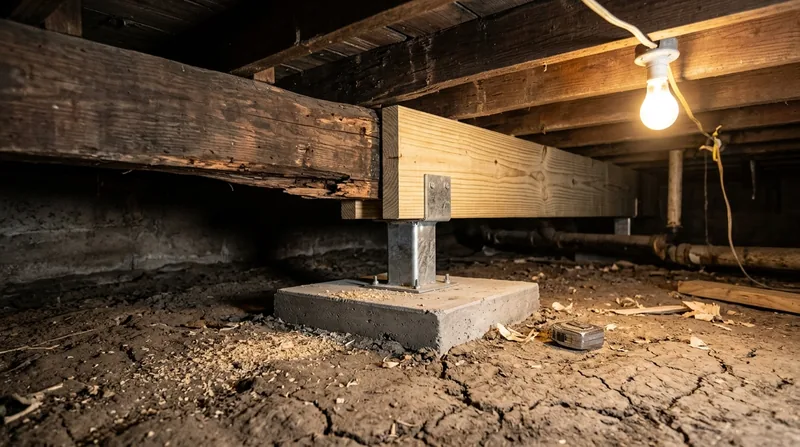




Sagging, bouncy, or soft floors in Stockton homes often signal trouble in the crawl space below. Floor joist and subfloor repair in Stockton addresses the root causes: termite damage, dry rot, and the seasonal swelling and settling of adobe clay under pier-and-beam foundations that are common across the Magnolia Historic District, Tuxedo Park, and older ranch neighborhoods. The San Joaquin Delta's hot, dry summers and wet winters create ideal conditions for subterranean termites and the fungal decay that eats away at wood joists and rim boards. When a floor loses its structural support, even a small repair becomes expensive and disruptive. We sister compromised joists, replace rotted subfloor sections, and level floors before finishes go back down, restoring both safety and the livability of the home.
Why Floor Joist and Subfloor Repair Matters in Stockton's Historic and Ranch Homes
Stockton's building stock tells the story of why this repair is so common here. Victorian and Craftsman homes built in the 1890s through 1930s sit on raised foundations with crawl spaces that collect moisture and invite termites. Mid-century ranch homes in Lincoln Village, Country Club, and south Stockton have similar vulnerabilities. The adobe clay soils of the Delta expand and contract with winter rains and summer heat, causing foundation movement that cracks and racks the rim joists and floor systems above. Subterranean termites, among the most active in California, tunnel through joists and sill plates without warning. Dry rot fungus spreads wherever moisture lingers, whether from lawn sprinklers, plumbing leaks, or the fog and rain that settles in crawl spaces during winter.
- Sagging floors develop when termite colonies hollow out joists or dry rot softens the wood grain.
- Bouncy or springy floors indicate joists that have lost stiffness and can no longer span the distance without deflection.
- Soft spots in subfloor or rim boards signal active decay that will worsen without repair or replacement.
- Foundation settling caused by clay swelling can rack joists and separate them from their bearing points.
Addressing these issues early prevents larger structural failures and keeps repair costs from spiraling. For more on the termite and dry rot pathologies that often accompany floor damage, see our termite damage repair and wood rot repair services.
Key info: Stockton sits at sea level where the San Joaquin River meets the Delta, with expansive adobe clay and peat soils that swell in winter and shrink in summer. This seasonal movement cracks and settles raised-foundation floors, racking joists and rim boards. Combined with termite and dry rot pressure, foundation movement is the dominant driver of floor repair work in the region.
How We Repair Floor Joists and Subfloor in Stockton Homes
Every floor repair starts in the crawl space with a clear diagnosis. We examine joists, rim boards, sill plates, and subfloor for termite galleries, soft rot, and signs of past moisture. We assess foundation movement and any separation between joists and their bearing points. Once we understand the scope and cause, we propose repair or replacement. Many joists that look damaged on the surface can be sistered, meaning we bolt a new pressure-treated joist alongside the compromised one to restore load capacity. Subfloor sections are replaced where rot or termite damage is too extensive to repair, and we level the floor before finish work begins.
- We access the crawl space, document the damage with photographs, and assess structural integrity.
- We sister compromised joists by bolting new Douglas fir or pressure-treated lumber alongside the damaged member.
- We replace subfloor sections where wood is too soft or hollow to salvage, using exterior-grade plywood or solid boards.
- We level the floor using hydraulic jacks and shims, restoring the proper slope for finish flooring and appliances.
- We document the work and damage for insurance claims, helping you file for coverage if the cause is an insured loss.
The entire process respects the home's original framing and preserves historic character where possible. We work with the home's existing structural logic rather than over-building.
Example: A 1920s Craftsman in the Magnolia Historic District had a soft spot in the master bedroom floor. Our inspection found two joists with active dry rot and termite galleries in the rim board. We sistered the two joists with pressure-treated lumber, replaced a 4-foot section of rim board, and releveled the floor. The repair cost less than half the price of replacing the entire joist bay, and the floor now feels solid underfoot. See our framing and structural carpentry page for more on load-bearing repairs.
Floor Joist and Subfloor Repair Methods and When to Use Them
| Approach | Description | Best for |
|---|---|---|
| Joist Sistering | New pressure-treated or Douglas fir joist bolted alongside the damaged member, sharing the load and restoring stiffness. | Joists with moderate termite or dry rot damage where the wood grain still has integrity and the joist can still bear partial load. |
| Joist Replacement | Removal of the damaged joist and installation of new pressure-treated lumber cut to the same length and bolted to bearing points. | Joists that are hollow, severely weakened, or where sistering would not restore adequate load capacity or stiffness. |
| Subfloor Patching | Removal of rotted or termite-damaged subfloor boards and replacement with new exterior-grade plywood or solid wood, fastened to the joists. | Localized soft spots or small sections of subfloor affected by moisture or termite damage, not affecting the structural joists. |
| Floor Leveling | Use of hydraulic jacks and shims to restore the floor to proper level or slope before finish flooring, tile, or appliances are installed. | Any repair job where foundation settling or joist sagging has tilted the floor, and finish work requires a true surface. |
| Rim Board and Sill Plate Repair | Replacement of the perimeter rim board or sill plate where termites or rot have compromised the bearing surface for joists and rim joists. | Damage to the rim or sill that affects the stability or bearing of multiple joists, or where moisture intrusion is ongoing. |
Each method is chosen based on the extent of damage, the structural role of the member, and the long-term durability of the repair. We favor repair over replacement whenever the wood justifies it, keeping costs down and preserving the home's original framing character.
Floor Joist and Subfloor Repair Cost in Stockton: What to Expect
Floor joist and subfloor repair in Stockton typically starts at $1,800 for a localized repair such as sistering one or two joists or patching a small subfloor section. Larger jobs, such as replacing multiple joists or extensive subfloor sections across a room or multiple bays, can range from $3,500 to $8,000 or more depending on the scope. Several factors affect the final cost: the number of joists that need repair or replacement, the extent of subfloor damage, the accessibility of the crawl space, whether the floor needs leveling, and the presence of obstacles such as plumbing or electrical lines that must be carefully worked around.
A ranch home in Lincoln Village with two soft joists and a 6-foot by 8-foot subfloor section needing replacement might run $4,200 to $5,500. A Victorian in Tuxedo Park with four compromised joists, a rotted rim board, and significant leveling work could approach $7,000 to $9,000. The only way to know your cost is to have us inspect the crawl space and provide a detailed estimate. We respond within 24 hours and there is no obligation to book.
Getting 2 or 3 estimates is always smart. Compare not just price but the scope of work proposed, the materials specified (pressure-treated lumber, exterior-grade plywood, fastener type), and the warranty or guarantee offered. See our full pricing overview for detailed breakdowns and to understand what moves the needle on cost.
Floor Joist and Subfloor Repair Near Me: What Stockton Homeowners Should Know When Hiring a Carpenter
Finding a qualified carpenter for floor joist and subfloor work requires more than a quick online search. You want someone who understands the specific challenges of Stockton's building stock, climate, and soil conditions. A good contractor will spend time in the crawl space, explain what they find in plain language, and propose repair before replacement whenever the wood justifies it. They will be fully insured and able to show proof of coverage. They will get a permit if the work alters a load-bearing member or affects the structural system, and they will defer to your local building department for the specific permit requirements, which vary by scope.
- Ask the contractor if they have experience with the specific pathology you are facing: termite damage, dry rot, foundation settling, or a combination.
- Request references from at least two or three recent jobs in Stockton, Lodi, Tracy, or Manteca, and call them to ask about the quality of the repair and whether the floor remains solid years later.
- Get a written estimate that itemizes the work, materials, and labor, and specifies the type and grade of lumber to be used.
- Confirm that the contractor carries liability insurance and workers compensation if they have employees, and ask to see the certificates.
- Understand whether your homeowners insurance will cover the damage and what documentation the contractor can provide to support a claim.
Stockton Carpentry has been repairing floors and structural carpentry in the Delta since 2016. We are fully insured and EPA Lead-Safe Certified. We work on homes across Stockton, Lodi, Tracy, Manteca, and the surrounding areas. Call us at (209) 299-0281 for a free, no-obligation estimate, or visit our contact page to request a time that works for you.
Floor Joist & Subfloor Repair in Stockton: Pricing Guide
| Service | Price | Details |
|---|---|---|
| Joist Sistering (1-2 joists) | Starting at $1,800 | Includes labor to bolt new pressure-treated lumber alongside damaged joists and restore load capacity |
| Subfloor Patching (up to 100 sq ft) | Starting at $2,200 | Removal and replacement of rotted or termite-damaged subfloor with exterior-grade plywood, fastened and leveled |
| Multiple Joists and Subfloor Repair (3+ joists, extensive damage) | Starting at $4,500 | Combines sistering or replacement of multiple joists, subfloor patching, rim board repair, and floor leveling |
| Full Joist Bay Replacement with Leveling | On estimate | Complex jobs involving multiple failed joists, extensive subfloor loss, and significant floor leveling require on-site assessment |
| Travel and Estimate | Free | No travel charge in Stockton and surrounding areas; free estimate with response within 24 hours at (209) 299-0281 |
Indicative pricing, the exact cost depends on square footage, finish, and site access. Free personalized estimate within 24h at (209) 299-0281.


