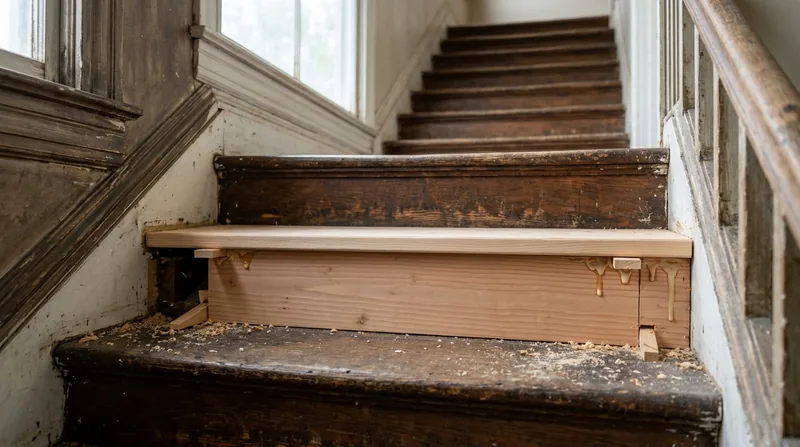




Stair & Railing Repair in Stockton keeps the heart of your home safe and sound. Whether you live in a 1920s Craftsman on the shaded streets of the Magnolia Historic District, a mid-century ranch in Lincoln Village, or a newer two-story in Brookside or Weston Ranch, stairs and railings take hard use over decades. Squeaky treads, loose banisters, worn stringers, and wobbly handrails are common in Stockton's diverse housing stock, where seasonal moisture swings and the region's heat cycles work on wood grain and fasteners year-round. We repair staircases in homes old and new, restoring period railings in historic properties and installing code-compliant handrails in contemporary builds. Our work keeps your family moving safely through your home and protects the structural integrity of a critical access point.
Why Stair & Railing Repair Matters in Stockton Homes
Stockton's climate and building age combine to create real wear on stairs and railings. Seasonal moisture from winter fog and rain penetrates wood stringers and balusters, especially in crawl-space homes where humidity rises from below. Hot, dry summers then shrink the wood, loosening joints and fasteners. In homes built on raised foundations along the Delta, settling and racking from expansive adobe clay and peat soils can rack stair stringers and throw railings out of plumb. Older homes in the Magnolia District and Tuxedo Park often have original wooden railings with period details that deserve repair rather than replacement, while newer subdivisions rely on fastened assemblies that need tightening and occasional component replacement.
- We tighten loose treads and risers, eliminating squeaks that signal movement and wear.
- We repair or replace damaged stringers, the angled support boards that carry stair loads.
- We restore period railings and balusters in historic homes, matching wood species and joinery.
- We install code-compliant handrails and guardrails that meet current building safety standards.
- We address wood rot and dry rot in stair components, replacing only the damaged sections whenever sound wood remains.
Stairs are a safety feature, not a luxury, and a compromised staircase can injure someone and expose you to liability.
Key info: Many stair alterations and railing installations require a permit from your local building department. Code requirements for handrail height, baluster spacing, and guardrail strength have changed over the decades. Contact your Stockton building department to confirm what applies to your project before work begins.
How We Repair Stairs and Railings in Stockton
Our approach begins with a careful inspection. We identify which components are structurally sound and which need repair or replacement. We assess tread and riser condition, check stringer integrity for rot or movement, examine baluster and newel post connections, and verify handrail security and compliance. Once we understand the scope, we propose the most durable and cost-effective path forward. That might mean tightening fasteners, sistering a damaged stringer, replacing a few balusters, or a full railing rebuild. We work from the building code and from the real wood in front of us, not from a template.
- We inspect the entire stair assembly, checking treads, risers, stringers, balusters, newel posts, and handrails for movement, rot, and wear.
- We identify which components can be repaired and which must be replaced to restore safety and durability.
- We source matching wood species when replacement is needed, preserving the character of older homes.
- We install new fasteners, shims, and blocking to eliminate movement and squeaks.
- We install or upgrade handrails and guardrails to meet current code if your stair is being altered or if an existing railing is unsafe.
- We finish repaired or new wood to match the existing surface, whether paint, stain, or clear coat.
We also handle related carpentry work, such as interior door installation and repair at landings, or finish work on adjacent trim and casing.
Local example: A 1950s ranch in Lincoln Village had a basement stair with a loose stringer and squeaky treads. We found that the stringer had begun to cup from moisture rising in the crawl space, and fasteners had backed out. We sistered a new Douglas fir stringer alongside the original, installed new fasteners, and tightened all treads and risers. The stair is now solid and quiet, and we did not have to replace the entire assembly. The cost was a fraction of what a full replacement would have been.
Stair & Railing Repair Methods
| Approach | Description | Best for |
|---|---|---|
| Tightening and fastening | Remove old fasteners, shim gaps, install new hardware or lag bolts, tighten all connections. | Squeaky treads, loose balusters, minor movement in railings. |
| Sistering damaged stringers | Install a new stringer alongside a cupped, cracked, or rot-damaged original, fastening both together to share the load. | Stringers with rot, moisture damage, or structural movement that can still support the repair. |
| Component replacement | Replace individual treads, risers, balusters, newel posts, or handrails with new wood matching the original species and profile. | Isolated rot, broken balusters, worn or split treads, non-compliant railings. |
| Full stair or railing rebuild | Remove and rebuild the entire assembly, including stringers, treads, risers, balusters, newel, and handrail, to code and to design. | Severe rot, structural failure, code non-compliance, or historic restoration where character and period detail matter. |
| Railing installation and upgrade | Install new handrails, guardrails, or balusters to meet current code, whether in new work or retrofit on existing stairs. | Stairs that lack proper handrails, balusters spaced too far apart, or guardrails below code height. |
Stair & Railing Repair Cost in Stockton: What to Expect
Stair and railing repair costs in Stockton start at around $600 to $1,200 for basic tightening, fastening, and minor component replacement on a single flight. More complex work, such as sistering a stringer or replacing multiple balusters and handrails, typically runs $1,500 to $3,500. A full stair rebuild or railing restoration in a historic home can exceed $5,000 depending on the scope, wood species, and detail work required. Several factors move the cost:
- The extent of rot or structural damage determines whether repair is enough or replacement is necessary.
- Stringer size and the number of flights affect labor time and material cost.
- Wood species, especially if matching redwood or Douglas fir in older homes, increases material cost.
- Access and site conditions, such as tight basements or exterior stairs exposed to weather, add complexity.
- Code compliance upgrades, such as installing new handrails or adjusting baluster spacing, expand the scope.
- Historic detail work or custom joinery in period railings requires more time and skill than standard assemblies.
We recommend getting a free, no-obligation estimate so you can understand exactly what your stair or railing needs and what the real cost will be. See our full pricing overview for more detail on how we structure estimates and what factors drive cost in your specific situation.
Stair & Railing Repair Near Me: What Stockton Homeowners Should Know When Hiring a Carpenter
Finding the right carpenter for stair and railing work means looking beyond price alone. A good contractor will listen to what you observe (squeaks, movement, loose railings), inspect the work carefully, explain what they find, and propose repair before replacement whenever the wood justifies it. They will understand building code requirements for handrails, guardrails, and baluster spacing, and they will know whether your project requires a permit from your local building department. They will carry full insurance and be willing to provide references from recent work in Stockton and surrounding areas.
- Ask whether the contractor is fully insured and can provide a certificate of insurance on request.
- Get at least two or three estimates so you can compare scope, method, and price across contractors.
- Ask for references from recent stair or railing work in Stockton, Lodi, Tracy, Manteca, or nearby areas.
- Confirm that the contractor understands which alterations require a permit and will help you coordinate with your building department.
- Verify that the contractor will source matching wood species if replacement is needed, especially in older homes.
- Ask whether the contractor has experience with period railings and historic detail if your home is in the Magnolia District or another designated historic area.
Stockton Carpentry has been in business since 2016 and is an EPA Lead-Safe Certified Firm. We are fully insured and work throughout Stockton and the surrounding Delta communities. Call us at (209) 299-0281 for a free estimate, or visit our contact page to request a callback within 24 hours. We also handle related carpentry, including wood rot and dry rot repair in stair components, and termite damage repair in older homes where drywood termites have compromised joinery or structural wood.
Stair & Railing Repair in Stockton: Pricing Guide
| Service | Price | Details |
|---|---|---|
| Tightening, fastening, and minor repairs | Starting at $600 | Includes inspection, tightening loose treads and balusters, new fasteners, and finishing. Single flight, no structural damage. |
| Component replacement (treads, balusters, handrails) | Starting at $1,200 | Replacing individual components such as split treads, broken balusters, or worn handrails. Material and labor for up to three components. |
| Sistering a damaged stringer | Starting at $1,800 | Installing a new stringer alongside a cupped or rot-damaged original. Includes removal of old fasteners, installation, and finishing to match. |
| Full stair or railing rebuild | Starting at $4,000 | Complete rebuild including stringers, treads, risers, balusters, newel, and handrail. Historic detail work or multiple flights increases cost. |
| Handrail or guardrail installation (code upgrade) | Starting at $800 | Installing new handrails or guardrails to meet current code on existing stairs. Material, fastening, and finishing included. |
| Free estimate | Free | Response within 24 hours at (209) 299-0281. No obligation to book. Detailed scope and pricing provided on site. |
Indicative pricing, the exact cost depends on square footage, finish, and site access. Free personalized estimate within 24h at (209) 299-0281.


