The Adobe Clay Problem: Why Your Stockton Home Is Moving
If you live in Stockton, you've probably noticed something odd about your house. A door that won't close properly. Floors that aren't quite level. Cracks appearing where the wall meets the ceiling. These aren't signs of poor construction, and they're not your imagination. They're the direct result of living on adobe clay soil, one of the Central Valley's most distinctive geological features.
Adobe clay is highly expansive. When it absorbs moisture during the rainy season, it swells. When it dries out in summer, it shrinks. This constant expansion and contraction creates movement beneath your foundation that no amount of careful building can prevent. Unlike sandy or rocky soil that remains relatively stable, adobe clay acts almost like a living thing, breathing with the seasons. Your home's foundation sits on top of this shifting platform, which means your entire structure moves with it. Over months and years, these small movements add up, causing the structural issues homeowners throughout Stockton know all too well.
Why Doors Stick and Won't Close Properly
One of the first signs of foundation movement is a door that won't close properly. You might notice that a door that worked fine last year now sticks at the top corner, or it swings open on its own even when you've closed it firmly. This happens because the door frame itself has shifted slightly out of square. When adobe clay expands, it can lift one corner of your foundation higher than another. When it contracts, it drops unevenly. These movements, even if they're only a quarter-inch or half-inch, are enough to throw a door frame out of alignment.
The problem gets worse over time. As your foundation continues to settle and shift with seasonal moisture changes, the frame warps further. Paint begins to crack around the door jamb. You might see gaps appearing between the door and the frame. Sticking doors in a house are frustrating, but they're also a warning sign that something is happening beneath your home. If you're experiencing this issue, it's worth having a professional assess whether the movement is minor and cosmetic, or whether it indicates a more serious foundation problem that needs attention. The sooner you address it, the easier and less expensive the repair will be.
Uneven Floors and the Sloping House Phenomenon
Walk across your kitchen or living room and pay attention to how the floor feels underfoot. Does it seem to slope slightly in one direction? Do you notice that a marble or small toy rolls slowly toward one wall? These observations point to uneven floor settlement, another classic symptom of adobe clay movement. Unlike a sticking door, which affects one small area, an uneven floor tells you that your foundation has settled unevenly across a much larger area. One side of your home may have settled more than the other, or one corner may have dropped while another has risen.
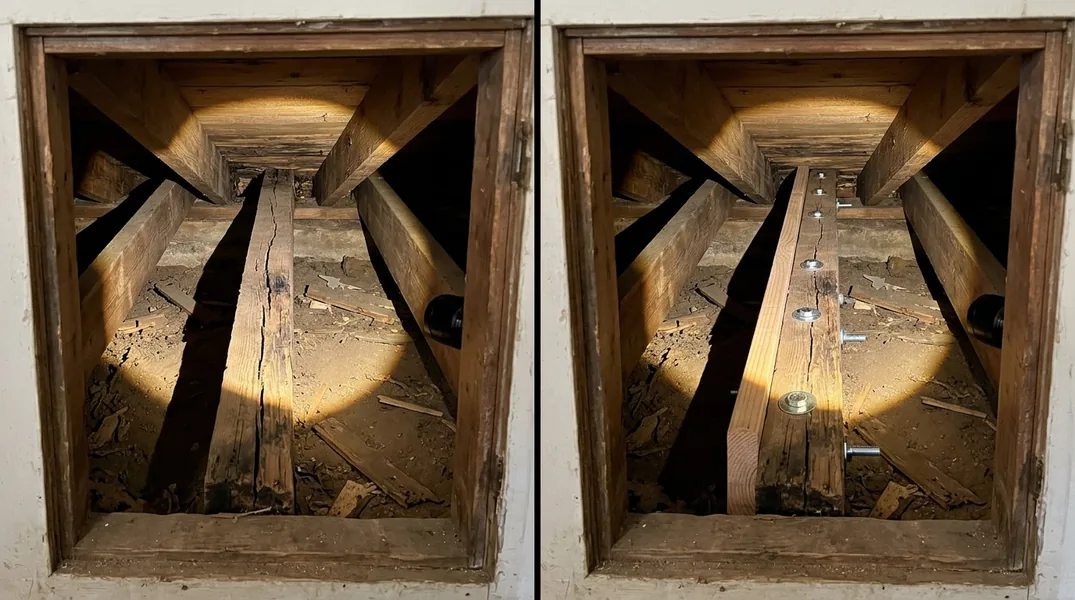
Uneven floor repair is more complex than simply releveling the floor itself. The real issue is the foundation beneath it. Pouring new concrete or replacing floor boards won't solve the problem if the foundation continues to move. This is where professional diagnosis becomes essential. A structural carpenter can determine whether the movement has stabilized or is still active, and whether the slope is cosmetic or structural. If the movement is ongoing, temporary fixes will fail. If the movement has stopped, then Floor Joist & Subfloor Repair becomes a viable solution. Either way, you need to understand what's happening beneath your home before you invest in repairs.
How Adobe Clay Moves Your Foundation Year After Year
Understanding the seasonal cycle of adobe clay movement helps explain why your home has these problems. During winter and spring, when Stockton receives rainfall and the soil is saturated, adobe clay expands. This expansion pushes upward on your foundation with considerable force. Some areas of your foundation may lift more than others, depending on drainage patterns, soil composition, and how deep your foundation goes. Then, during the long dry months of summer and fall, the soil shrinks away from your foundation. This creates voids and allows your foundation to settle unevenly.
Year after year, this cycle repeats. Each cycle causes small movements that accumulate over time. A door frame that was perfectly square in year one is slightly out of square by year five. A floor that was level is noticeably sloped by year ten. The damage isn't always catastrophic. Many homes in Stockton live with minor settling for decades without serious structural problems. However, if your home has experienced significant water damage, pest damage, or if the foundation movement is severe, you may need professional intervention. This is where issues like Wood Rot & Dry Rot Repair and foundation repair become interconnected. Water intrusion caused by foundation cracks can lead to wood rot in floor joists and beams, compounding the structural problem.
When to Call a Professional for Foundation and Structural Repair
Not every sticking door or sloped floor requires emergency intervention. However, certain warning signs indicate you should call a professional right away. If you see multiple doors sticking throughout your home, if cracks are appearing in drywall or plaster, if you notice water seeping into your basement or crawl space, or if floors are sloping noticeably, these are red flags. You should also be concerned if you see cracks in the foundation itself, or if you notice that cracks are growing visibly over weeks or months rather than remaining stable.
A professional structural assessment can determine whether your home's movement is normal settling or a sign of serious problems. Stockton Carpentry specializes in identifying and addressing the structural issues that adobe clay soil creates. We can evaluate your foundation, assess the condition of floor joists and beams, and recommend the right solution. Whether you need Beam Replacement & Load-Bearing Wall Removal, foundation repair, or simply monitoring, a professional can give you peace of mind and a clear path forward. Call us at (209) 299-0281 or request a free estimate to discuss your home's specific situation.
Preventing Future Damage: Maintenance and Drainage Solutions
While you can't stop adobe clay from expanding and contracting, you can minimize the damage it causes. The key is managing moisture. Proper drainage around your home reduces the amount of water that reaches the soil beneath your foundation. Make sure gutters and downspouts direct water at least five feet away from your house. Grade the soil around your foundation so water slopes away rather than pooling near the walls. If you have landscaping or a garden close to your home, consider removing it or reducing irrigation in those areas. Every bit of moisture you keep away from the foundation reduces the expansion pressure on your soil.
Inside your home, maintain consistent humidity levels. Use a dehumidifier in damp areas like basements and crawl spaces. Fix plumbing leaks promptly, as even a small leak can introduce significant moisture into the soil over time. If you've had work done on your home, whether foundation repair or Floor Joist & Subfloor Repair, maintain the repairs properly. Regular inspections, especially before and after the rainy season, can catch new problems early when they're easier and cheaper to fix. Stockton Carpentry can help you develop a maintenance plan tailored to your home's specific needs and condition.
Looking for a professional carpentry contractor in Stockton? Stockton Carpentry responds fast for all your carpentry needs.
Get a Free QuoteOur services: Wood Rot & Dry Rot Repair · Termite Damage Repair · Floor Joist & Subfloor Repair