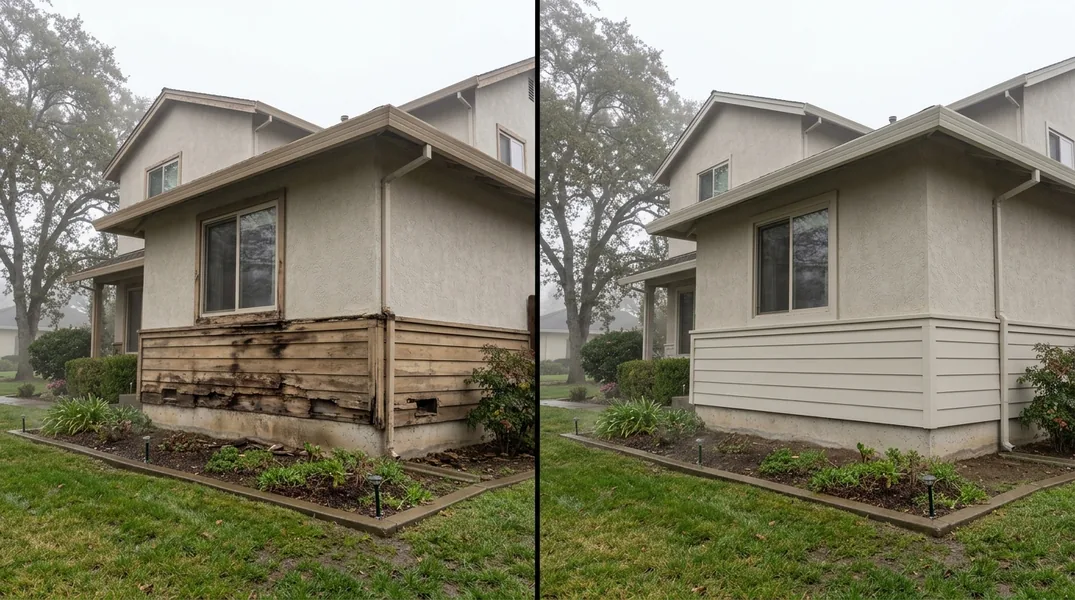
Termite Damage vs Dry Rot: Understanding the Enemy
If you own a home in Stockton, you've likely heard about the dangers of wood-destroying pests and fungi. Two of the most common threats to your home's structural integrity are termite damage and dry rot. While both can cause serious problems, they're fundamentally different issues that require different solutions. Understanding the distinction is the first step toward protecting your investment and knowing when to call a professional.
Termites are living insects that actively consume wood as they tunnel through your home's structure. Dry rot, on the other hand, is a fungal disease that causes wood to decay and crumble from the inside out. The causes, progression, and repair methods differ significantly, which is why a correct diagnosis is essential. Many homeowners confuse the two, which can lead to ineffective treatment and ongoing damage. At Wood Rot & Dry Rot Repair, we help Stockton residents identify what's damaging their homes so we can provide the right fix.
What Does Dry Rot Look Like? Visual Signs to Watch For
Dry rot creates a distinctive appearance that sets it apart from termite damage. When a wood surface is affected by dry rot, it typically develops deep cracks that form a cube-like or honeycomb pattern. The wood becomes brittle and crumbly, often turning a reddish-brown or grayish color depending on the fungus species and the stage of decay. You might also notice a musty, damp smell around affected areas, even though dry rot thrives in low-moisture environments. The fungus itself may appear as white or gray strands (called mycelium) on the wood surface or nearby materials.
One key characteristic of dry rot is that it can spread through masonry and across non-wooden materials by means of fungal threads, making it particularly insidious. The damage often appears in areas with poor ventilation, inadequate drainage, or where wood has been exposed to moisture over time. If you press on wood affected by dry rot, it will feel soft and may crumble easily under pressure. Unlike fresh water damage, dry rot damage tends to be localized but can expand significantly if left untreated. If you suspect dry rot in your Stockton home, a professional inspection is crucial because the visible damage may represent only a fraction of the actual problem.
Signs of Termite Damage: What Active Infestation Looks Like
Termite damage presents very differently from dry rot. When drywood termites infest your home, they create galleries or tunnels inside the wood while leaving the outer shell relatively intact. This means the damage can be extensive before you notice anything obvious from the outside. However, there are telltale signs that indicate termite activity. You may find small piles of sawdust-like pellets (called frass) near baseboards, in attics, or under wooden structures. These pellets are actually termite droppings and are one of the most reliable indicators of an active or recent infestation.
Another common sign of termite damage is the presence of mud tubes, which subterranean termites build to travel between the soil and wood. These tubes look like thin, pencil-sized corridors made of soil and saliva. You might also notice hollow-sounding wood when you tap on it, or wood that appears to have a honeycomb structure when broken open, though the galleries created by termites are more uniform and organized than the random cracking of dry rot. Drywood termite damage often occurs in attics, roof framing, and wall cavities where moisture is minimal. If you see swarms of winged insects near your home during spring or fall, that's a strong sign of a termite colony nearby.
Key Differences: Termites vs Dry Rot
The fundamental difference between termite damage and dry rot comes down to the cause. Termites are living creatures that actively feed on cellulose in wood, gradually hollowing it out from within. Dry rot is a fungal process that requires moisture to thrive and gradually breaks down the wood's cellular structure, turning it brittle and weak. This distinction matters because the treatment approach is completely different. Termite damage requires pest control intervention to eliminate the colony, while dry rot requires moisture control and fungal treatment, followed by replacement of severely damaged wood.
In terms of progression, termite damage can spread relatively quickly if the colony is large and active, while dry rot typically develops more slowly but can be harder to detect early. Termite damage tends to follow wood grain patterns and create clean, organized galleries, whereas dry rot creates random, deep cracks and a crumbly texture. Another key difference is that termites produce visible frass (droppings), while dry rot may produce a fine, dust-like residue. The moisture requirements also differ: dry rot needs consistent moisture to spread, while subterranean termites need soil contact but drywood termites can survive in dry wood. Understanding these differences helps you communicate more effectively with professionals and understand what repairs you'll need.
When to Call a Professional: Termite Damage Repair Near Me
If you've identified signs of either termite damage or dry rot in your home, professional assessment is essential. Both conditions can compromise your home's structural integrity, and the longer you wait, the more expensive repairs become. Termite Damage Repair requires not only treating the infestation but also assessing and repairing the damage left behind. A professional can determine the extent of the damage, whether structural elements like beams or floor joists need replacement, and what preventative measures should be taken.
For dry rot, the situation is equally urgent. Fungal decay spreads through moisture pathways, and without addressing the underlying moisture problem, the rot will continue to advance even after visible damage is removed. A skilled carpenter can identify moisture sources, recommend ventilation or drainage improvements, remove affected wood, and replace it with sound material. At Stockton Carpentry, we handle both Wood Rot & Dry Rot Repair and Termite Damage Repair, and we can also manage structural repairs like Floor Joist & Subfloor Repair if damage has affected load-bearing elements. Don't delay in getting a free estimate if you suspect either problem in your home.
Next Steps: Getting Your Stockton Home Inspected
The best way to determine whether your home has termite damage, dry rot, or both is to schedule a professional inspection. A thorough evaluation will identify the source of the problem, the extent of the damage, and the best repair strategy. Early detection can save you thousands of dollars in repairs and prevent further structural compromise. If you're noticing soft wood, strange smells, visible damage, or pest activity in your Stockton home, don't wait.
Contact Stockton Carpentry today at (209) 299-0281 or visit our website to request a free estimate. Our team has the expertise to diagnose your wood damage accurately and provide a clear plan for repair. Whether you're dealing with termite damage, dry rot, or structural issues from either cause, we're here to help restore your home's integrity and give you peace of mind.
Looking for a professional carpentry contractor in Stockton? Stockton Carpentry responds fast for all your carpentry needs.
Get a Free QuoteOur services: Wood Rot & Dry Rot Repair · Termite Damage Repair · Floor Joist & Subfloor Repair