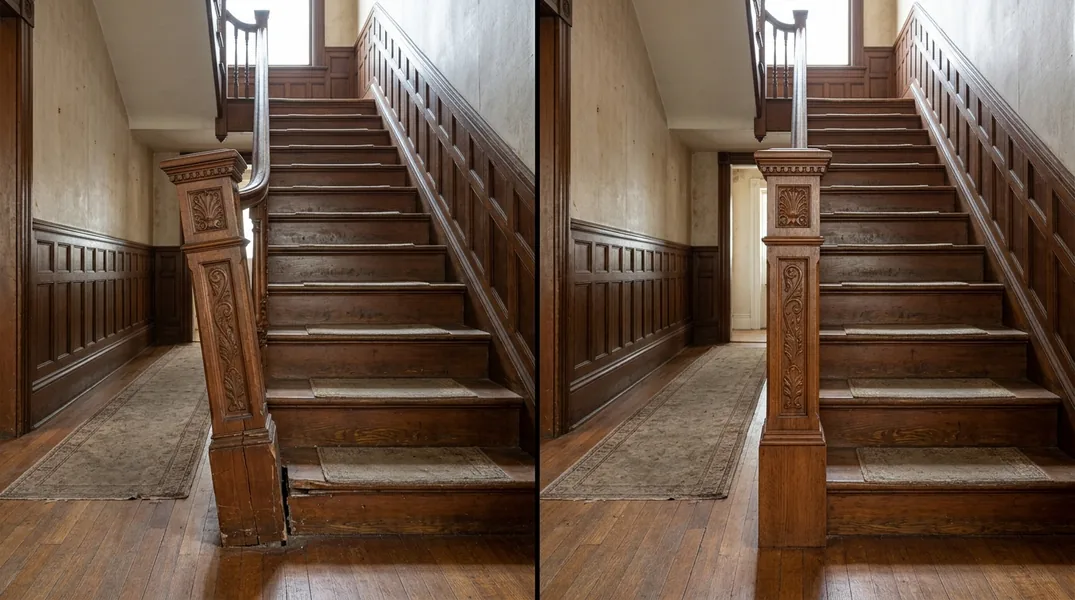
Understanding the Damage: Rot vs. Termite Damage
When you discover soft, discolored wood on your home's exterior or interior, your first instinct might be panic. But before you assume the worst, it helps to understand what you're actually dealing with. Wood rot and termite damage might look similar at first glance, but they require very different repair approaches.
Wood rot occurs when moisture penetrates wood fibers and allows fungi to break down the cellulose. This creates a soft, spongy texture that crumbles easily when you press it. Termite damage, by contrast, leaves behind a honeycomb-like pattern of hollow galleries as the insects tunnel through the wood. The surface may appear intact while the interior is completely compromised. Both problems are serious, but identifying which one you have is the first step toward deciding whether you can repair rotted wood without replacing it or if full replacement is necessary.
In Stockton, where humidity levels can fluctuate and older homes are common, wood damage is a frequent concern for homeowners. The good news is that early detection and honest assessment can save you thousands of dollars.
When Repair Is Possible: The Early Intervention Advantage
Not all wood damage requires a complete replacement. If you catch the problem early, repair rotted wood without replacing might be entirely feasible. The key factor is the extent of the damage and the structural importance of the affected wood.
Surface-level rot that hasn't penetrated more than a quarter inch into the wood is often a good candidate for repair. In these cases, a skilled carpenter can remove the damaged section, treat the underlying moisture issue, and fill the void with epoxy wood filler or a compatible wood patch. This approach works best on trim, fascia boards, and decorative elements that don't bear structural weight. Similarly, if termite damage is caught before it affects load-bearing members, localized repair and treatment can prevent future infestation.
The cost advantage of repair is significant. A Wood Rot & Dry Rot Repair approach using epoxy or wood patching typically costs a fraction of full board replacement. However, the repair is only as good as the moisture control that follows. If you don't address the root cause (poor drainage, roof leaks, plumbing issues, or inadequate ventilation), the rot will return within months or years.
When Replacement Is the Only Real Option
There are situations where repair simply isn't safe or cost-effective. If wood damage extends deep into the grain, affects more than 30 percent of a board's cross-section, or compromises a structural member like a floor joist or beam, replacement is the only responsible choice. Trying to patch severely damaged structural wood is like putting a band-aid on a broken bone. It won't hold, and it puts your home and family at risk.
Termite Damage Repair that involves structural elements almost always requires replacement rather than repair. Termites can hollow out the interior of a beam or joist while leaving the surface looking relatively normal. A carpenter who probes the wood with a screwdriver or awl can quickly determine the extent of the damage. If the wood is soft throughout or if galleries extend into multiple areas, replacement is necessary.
Replacing rotted wood siding is also common and straightforward. Exterior siding bears no structural load, so individual boards or sections can be removed and replaced without affecting your home's integrity. This is often the most cost-effective solution for widespread siding damage, especially if the rot has affected multiple consecutive boards. The new siding can match the existing material and color, restoring both function and appearance.
Wood Repair Cost in Stockton: What to Budget
Understanding pricing helps you make an informed decision about repair versus replacement. The cost of wood repair varies widely based on the type of damage, the wood's location, and the repair method used.
For minor surface rot repair, you might spend anywhere from $200 to $800 per affected area, depending on accessibility and the size of the damaged section. Epoxy fillers and wood patches are relatively inexpensive materials, and labor time is limited to a few hours. If you're replacing a full board of siding, expect to pay $400 to $1,500 per board, including material and labor. For structural repairs like Floor Joist & Subfloor Repair, costs can climb to $2,000 to $5,000 or more, depending on the extent of the damage and whether temporary support structures are needed during the work.
Major structural issues involving Beam Replacement & Load-Bearing Wall Removal can cost significantly more, often ranging from $5,000 to $15,000 or beyond. The best way to understand your specific costs is to have a professional inspect the damage and provide a detailed estimate. Stockton Carpentry offers a free estimate so you can compare repair and replacement options with real numbers in front of you.
The Hidden Costs of Choosing Wrong
Making the repair versus replace decision isn't just about the immediate expense. There are hidden costs associated with choosing the wrong approach. If you opt for a cheap repair on wood that really needs replacement, you're likely looking at the same repair job again in a few years, plus the cost of addressing any secondary damage that occurs in the meantime. Water damage spreads. Termites multiply. Structural weakness compounds.
Conversely, replacing wood that could have been repaired wastes money and creates unnecessary waste. The environmental and financial cost of removing perfectly salvageable wood is real. This is why professional assessment matters so much. An experienced carpenter can look at the damage, test the wood's integrity, and give you an honest recommendation based on decades of experience, not on what generates the biggest invoice.
In Stockton, homeowners benefit from working with local professionals who understand the regional climate challenges and have seen how different repair approaches hold up over time. A repair that works well in a dry climate might fail in our more humid environment, and vice versa.
How to Get an Honest Assessment
The best way to make a repair versus replace decision is to get a professional evaluation from someone with no financial incentive to oversell you. Ask your contractor to explain the damage in detail, show you the extent of the problem, and explain why they're recommending repair or replacement. A good carpenter will walk you through the options, discuss the pros and cons of each approach, and let you make an informed choice.
When you call Stockton Carpentry at (209) 299-0281, you're working with professionals who prioritize honesty and durability over quick fixes. We'll inspect the damage thoroughly, explain what we find, and recommend the approach that makes the most sense for your home and budget. Whether that's a targeted repair to buy you time, a full replacement to solve the problem permanently, or a hybrid approach using both methods, we'll help you understand the reasoning behind our recommendation.
Wood damage doesn't have to be catastrophic. With the right assessment and timely action, you can protect your home's structural integrity and your family's safety while making smart financial decisions.
Looking for a professional carpentry contractor in Stockton? Stockton Carpentry responds fast for all your carpentry needs.
Get a Free QuoteOur services: Wood Rot & Dry Rot Repair · Termite Damage Repair · Floor Joist & Subfloor Repair